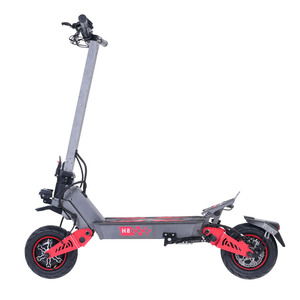
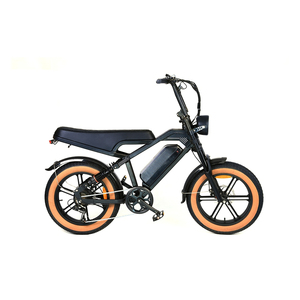
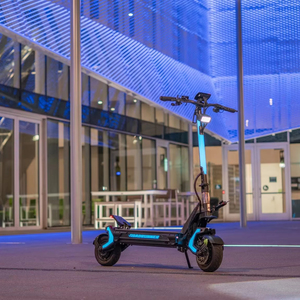
1. The Mumbai Electric Scooter Landscape: Regulatory Frameworks & Urban Trends
The Mumbai Metropolitan Region (MMR)—encompassing South Mumbai, the Western Suburbs (Bandra, Andheri, Borivali), Central Mumbai (Kurla, Ghatkopar), and Navi Mumbai—is undergoing an unprecedented shift toward light electric vehicles (LEVs). Accelerated by the Maharashtra EV Policy 2025 and national incentive structures such as the PM E-DRIVE scheme, fleet operators, last-mile logistics providers (Zomato, Swiggy, Blinkit, Porter), and B2B commuters are rapidly phasing out internal combustion engine (ICE) two-wheelers in favor of heavy-duty, zero-emission electric scooters.
However, importing and distributing electric two-wheelers in Mumbai presents distinct operational challenges that demand rigorous manufacturing standards. The local market requires vehicles capable of enduring extreme operational stress: high ambient temperatures reaching 42°C during summer, relative humidity exceeding 90% along coastal roads such as Marine Drive and Worli Sea Face, and torrential monsoon water-logging across flooded transit bottlenecks like Hindmata, Sion, and Kurla.
Why CE Certification is Critical for Mumbai Importers
While local Indian homologation relies on ARAI or ICAT certifications for registering high-speed motor vehicles, CE Certification (EN 17128:2020) serves as the definitive benchmark for structural integrity, electrical safety, and battery reliability for commercial buyers.
Low Voltage Directive (LVD 2014/35/EU): Guarantees circuit safety under severe electrical load variations.
Electromagnetic Compatibility (EMC 2014/30/EU): Prevents signal interference in dense Mumbai telecommunication corridors.
UN38.3 & EN 62133 Battery Standards: Protects lithium packs against thermal runaway during extreme ambient heating.
Customs, Port Logistics & Supply Chain Resilience
B2B procurement through Jawaharlal Nehru Port Trust (JNPT / Nhava Sheva) and Mumbai Port Trust demands complete technical documentation to streamline customs clearance and minimize demurrage costs.
CKD/SKD vs. CBU Importing: Flexible manufacturing pathways for local assembly hubs in Thane and Navi Mumbai industrial areas.
BMS Firmware Traceability: Compliant battery passports for seamless port inspection and customs clearance.
Anti-Corrosion Marine Packaging: Multi-layer vacuum foil sealing to prevent saltwater vapor degradation during oceanic transit.
Operating electric scooters in Mumbai is radically different from European or North American urban commutes. A whitepaper-level assessment reveals four harsh operational environments that dictate scooter engineering specifications:
Scenario A: Monsoon Ingress & Flood Navigation
During the annual monsoon season (June to September), Mumbai receives over 2,200 mm of rainfall. Roadways frequently experience waterlogging depths between 15 cm and 45 cm. Standard commercial e-scooters suffer short circuits, hub motor burnout, and controller failure under these conditions.
Our Engineering Solution: Fully enclosed powertrain modules rated to IP67 waterproof protection. Motor hub covers utilize dual lip oil seals, while controller housing features die-cast aluminum with silicone potted seals to withstand complete submersion up to 50 cm for 30 minutes.
Scenario B: Last-Mile Delivery & High Payload Fleets
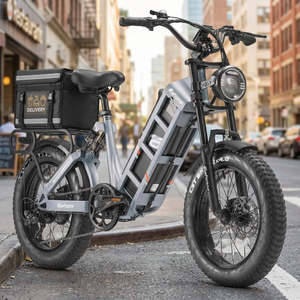
Hyperlocal delivery riders operating across Mumbai log between 100 km and 160 km daily while carrying cargo loads exceeding 150 kg (driver + delivery container). Stop-and-go traffic in congested commercial hubs like Crawford Market and Dadar causes immense thermal stress on electric drive systems.
Our Engineering Solution: High-torque brushless DC (BLDC) hub motors (ranging from 1000W to 4000W peak output) equipped with integrated phase-wire thermal cutoffs and heat-sink finned controllers. Dual lithium battery configurations (52V/48V up to 60Ah capacity) enable true long-range performance without mid-shift charging downtime.
Scenario C: Saltwater & High Humidity Corrosion
Mumbai's coastal atmosphere contains high salinity levels, which rapidly oxidize steel frames, exposed wiring connectors, suspension forks, and brake discs within 6 to 12 months of daily exposure along coastal arterial routes.
Our Engineering Solution: Aircraft-grade 6061-T6 aluminum alloy frames treated with electrophoretic deposition (ED) and automotive-grade powder coating. Fasteners utilize 304 stainless steel, while wire harnesses employ sealed waterproof automotive connectors with anti-oxidation gold-plated pins.
Scenario D: Steep Incline Navigation (Powai & Western Ghats)
Navigating hilly terrain in Mumbai North (Powai Hiranandani gradients, Thane Ghodbunder inclines, and Navi Mumbai Parsik Hill routes) demands high climbing torque without causing motor stalling or battery voltage sag.
Our Engineering Solution: High-flux vector sine-wave controllers with regenerative braking capabilities. Designed for 25° to 35° gradient climbing performance while maintaining energy recovery back into the lithium cell matrix during downhill descents.
Selecting the optimal battery cell chemistry and structural frame design is fundamental for enterprise procurement managers calculating 3-year Total Cost of Ownership (TCO). Below is an engineering comparison between standard market offerings and our CE Certified B2B Electric Mobility platform tailored for Mumbai:
Building upon decades of engineering excellence in consumer hardware and small mobility solutions, our global manufacturing ecosystem delivers unmatched advantages for distributors, corporate fleets, and white-label partners across India:
End-to-End OEM / ODM Customization
We provide full white-label manufacturing services for Mumbai e-mobility brands. Customization options include:
Speed Limiters & Geofencing: Programmed ECU speed governance tailored to local RTO non-registered vehicle limits (25 km/h) or high-speed commercial fleet requirements.
Water Immersion Chamber Test: High-pressure water jet spraying to verify IP67 sealing integrity prior to container loading.
Procurement Intelligence
Frequently Asked Questions by Mumbai B2B Buyers & Importers
Expert answers addressing customs logistics, regulatory compliance, after-sales warranty, and bulk ordering for the Mumbai market.
What is the difference between CE Certification and Indian ARAI Homologation for Mumbai imports?
CE Certification (including EN 17128, LVD, EMC, and UN38.3) is an international European quality and safety standard that verifies electrical safety, battery stability, and structural strength at the manufacturing level. ARAI (Automotive Research Association of India) or ICAT certification is required locally in India for registering vehicles on public roads under the Central Motor Vehicles Rules (CMVR). Importers sourcing our CE-certified scooters receive international safety compliance documentation that significantly streamlines local Indian technical evaluations and low-speed (under 25 km/h) RTO exemption filings.
How do your electric scooters withstand Mumbai’s severe monsoon water-logging?
Our commercial electric scooters feature IP67-rated waterproof enclosures for the battery compartment, BLDC hub motor, and electronic speed controller (ESC). Key wiring harnesses use automotive-grade waterproof connectors with silicone seals. Critical electronics are potted in thermal conductive resin to prevent moisture ingress, enabling safe traversal through water depths up to 50 cm without causing electrical short circuits or battery degradation.
What shipment formats are available for delivery into JNPT (Nhava Sheva) Port?
We offer completely flexible shipping configurations tailored to your tariff optimization and local assembly setup in Maharashtra: Completely Built Unit (CBU) for immediate fleet deployment, Semi-Knocked Down (SKD) for simplified local assembly, and Completely Knocked Down (CKD) for maximum import duty savings. All shipments include full MSDS, UN38.3 battery transport certificates, and custom commercial invoices for rapid JNPT customs clearance.
What warranty and aftermarket spare parts support do you provide for B2B fleet buyers?
We provide comprehensive B2B warranty coverage: 24 months on main lithium battery packs and structural frame assemblies, and 12 months on motors, controllers, and electronic displays. Additionally, we bundle 2% to 5% fast-moving spare parts (controllers, throttle assemblies, brake pads, tire tubes, and wiring harnesses) with every bulk container order to ensure your local Mumbai repair hub maintains 100% fleet uptime.
Can the battery systems handle Mumbai’s extreme summer heat without thermal degradation?
Yes. Our battery packs use high-grade LiFePO4 or thermal-stabilized 21700 NMC cells paired with a Smart BMS featuring dual temperature sensors. If cell temperatures approach 55°C during intense summer operation or fast-charging cycles, the BMS automatically regulates current output to prevent overheating. Aluminum heat-dissipation plates between cell matrices ensure rapid thermal dispersion even under 40°C+ ambient temperatures.
Partner with a Leading CE Certified Electric Scooter Manufacturer
Request our comprehensive B2B wholesale catalog, engineering spec sheets, and JNPT port landed cost estimates for the Mumbai market.