1. The Evolution of Video Surveillance: From Passive Recording to Proactive AIoT Systems
The global physical security landscape is undergoing a systemic paradigm shift. Historically, enterprise video surveillance operated as a passive archiving mechanism—capturing low-resolution video feeds stored locally on Analog NVRs for post-event forensic investigation. Today, leading security camera manufacturers and exporters are re-engineering hardware architectures around Edge-AI (Artificial Intelligence of Things), high-dynamic-range optical sensor chips, and cloud-native synchronization protocols.
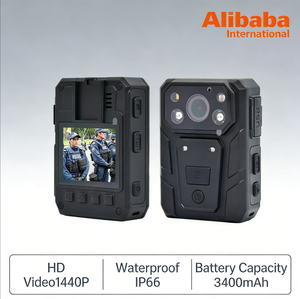
Modern commercial procurement teams across North America, Europe, the Middle East, and Southeast Asia no longer purchase surveillance devices based solely on megapixel counts. Instead, intent-driven purchasing decisions are governed by system interoperability, low-power continuous operation, cyber resilience, and actionable metadata extraction. Whether deploying Automatic Number Plate Recognition (ANPR/LPR) systems for smart city parking management or wearable 2K body-worn cameras for public safety officers, enterprise buyers require hardware platforms capable of real-time multi-class object detection, vehicle classification, and instantaneous anomaly reporting.
2. Technological Breakthroughs Reshaping the Security Camera Industry
To establish competitive differentiation in international trade, premier security camera OEMs invest heavily in five core hardware and software domains:
2.1 Low-Light Optical Sensing & Full-Color Night Vision (ColorVu 3.0 Tech)
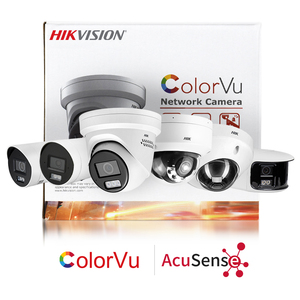
Traditional surveillance cameras rely on monochrome Infrared (IR) illumination during night hours, resulting in loss of critical forensic details such as clothing colors, vehicle paint shades, and facial characteristics. Advanced optical processing engines—such as ColorVu 3.0 technology—utilize ultra-large F1.0 super-apertures paired with 1/1.2" high-sensitivity Back-Illuminated (BSI) CMOS sensors. Combined with warm supplemental lighting and self-adaptive ISP algorithms, these cameras maintain full-color 4K resolution under extreme low-light conditions down to 0.0005 Lux.
2.2 Deep Learning AI Algorithms & AcuSense Target Filtering
False alarm suppression remains one of the largest Operational Expenditure (OpEx) drivers for commercial monitoring centers. Legacy motion detection triggers alerts based on pixel movement, causing constant false alarms from falling leaves, rain, shadow shifts, or small animals. Modern AcuSense 3.0 edge algorithms train deep neural networks to distinguish human figures and vehicles from irrelevant background noise with greater than 98.5% precision. This allows security personnel to focus exclusively on real security breaches.
2.3 ANPR/LPR Engine Integration for Access Control & Traffic Analytics
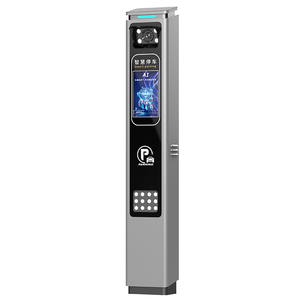
High-speed license plate capture cameras require specialized global shutter sensors, multi-frame WDR (Wide Dynamic Range >120dB), and built-in optical character recognition (OCR) engines. Modern ANPR cameras can identify vehicle plates across multiple lanes at speeds up to 160 km/h, while analyzing vehicle color, make, and direction of travel. These edge-processed data points feed directly into automated parking barriers and law enforcement databases via ONVIF Profile M protocols.
2.4 Off-Grid Solar Power Architecture & Low-Bandwidth 4G/5G LTE Transmission
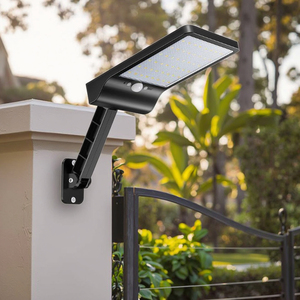
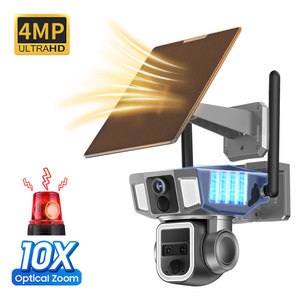
For remote infrastructure—such as agricultural estates, oil & gas pipelines, construction sites, and perimeter borders—trenching power cables and fiber optic lines is economically unviable. Exporters now produce self-contained Solar PTZ cameras equipped with high-efficiency monocrystalline solar panels, smart MPPT (Maximum Power Point Tracking) charge controllers, and industrial-grade LiFePO4 batteries. Utilizing ultra-low-power deep sleep modes and H.265+ Smart Codecs, these systems operate reliably even through consecutive overcast days.
3. Future Procurement & Sourcing Trends in the Global Security Market
Professional security equipment buyers must align their procurement cycles with emerging international regulatory standards, cybersecurity legislation, and long-term cost structures. Below are the key sourcing vectors dominating global trade over the next decade:
- Cybersecurity Compliance & Zero-Trust Architecture: With stringent regulatory directives such as the EU Cyber Resilience Act, US NDAA (National Defense Authorization Act) compliance, and ETSI EN 303 645 IoT security standards, buyers are shunning unencrypted legacy devices. Leading exporters now embed Hardware Root of Trust (TPM 2.0 modules), encrypted bootloader sequence, and AES-256 stream encryption directly on the SOC.
- Open Platform Communications (ONVIF Profiles S/G/T/M): Vendor lock-in is a major risk for enterprise systems. Procurement specs increasingly demand strict adherence to open standards, enabling seamless integration between third-party Video Management Systems (VMS) like Milestone, Genetec, or Synology and multi-vendor edge camera hardware.
- Transition to Cloud-Managed Hybrid Storage (VSaaS): While edge storage via MicroSD (up to 512GB) handles local buffering during network outages, direct camera-to-cloud streaming via WebRTC and MQTT enables centralized enterprise fleet management without requiring expensive local head-end servers.
- Eco-Design & Sustainable Supply Chain Auditing: Leading European and North American distributors require OEM partners to maintain ISO 14001 certification, comply with RoHS (Restriction of Hazardous Substances) and WEEE directives, and utilize recyclable aluminum alloy housing materials with corrosion-resistant powder coatings.
B2B Security Camera Hardware Selection Matrix
This technical comparison table helps procurement officers select the optimal camera form factor based on deployment environment, optical requirement, and analytical needs:
| Camera Form Factor | Primary Sensor / Res | Optical / Zoom Feature | Connectivity Standard | Target B2B Application |
|---|---|---|---|---|
| Wearable 2K Body Camera | 2K HD / 4MP CMOS | 140° Ultra-Wide Fixed | WiFi / Bluetooth / USB-C | Law Enforcement Patrols, Inspections |
| ColorVu 3.0 Outdoor Bullet | 4K 8MP BSI Sensor | F1.0 Fixed 2.8mm/4mm | PoE+ (802.3af) / ONVIF | Commercial Perimeters, Retail Exteriors |
| ANPR / LPR Dedicated Camera | 2MP High-Speed Global Shutter | 5-50mm Motorized Varifocal | Wiegand / Relay / IP | Smart Mobility Parking Gates, Toll Booths |
| Solar Powered 4G PTZ | 2K 4MP Dual-Sensor | 10X Optical Zoom | 4G LTE / 3G / WiFi | Off-Grid Farms, Construction Sites |
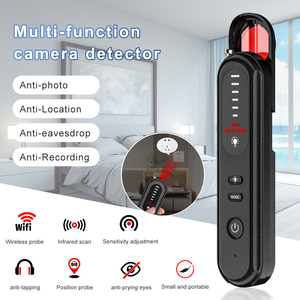
| RF & Bug Detection Scanner | Infrared + RF Detector | 1MHz - 6.5GHz Range | Handheld Battery Operated | Executive Safety Hotels, Boardrooms, VIP Travel |
4. Manufacturer Strengths & OEM/ODM Engineering Capabilities
As a global leader in consumer electronics and commercial security equipment manufacturing, our production footprint is optimized to support high-volume B2B distributors, system integrators, and brand owners worldwide. Built upon decades of precision manufacturing heritage, our OEM/ODM infrastructure offers distinct operational advantages:
Advanced SMT Assembly
High-speed Surface Mount Technology lines equipped with 3D Automated Optical Inspection (AOI) ensuring 100% component placement precision for high-density camera mainboards.
Rigorous Environmental Testing
Every batch undergoes IP65/IP66/IP67 water ingress immersion, salt spray anti-corrosion testing, vibration endurance, and extreme temperature thermal chamber validation (-30°C to +65°C).
Firmware & SDK Customization
Full-stack software engineering support: custom web UI branding, customized ONVIF implementation, cloud API integration, and localized mobile apps for iOS and Android platforms.
Global Certification Readiness
Seamless export support with complete documentation packages including CE, FCC, RoHS, REACH, WEEE, and specialized regional electrical safety certifications.
End-to-End Supply Chain Management
Direct strategic sourcing relationships with top-tier image sensor suppliers (Sony Starvis, OmniVision) and SOC chipset foundries guarantees stable supply lead times and cost predictability.
Dedicated Post-Sales Engineering Support
Tier-3 technical backstopping, RMA lifecycle management, spare parts provisioning, and long-term firmware security patch maintenance for up to 5 years post-production.
5. Comprehensive B2B Sourcing Guide: How Professional Buyers Evaluate Manufacturers
When shortlisting commercial security camera exporters, procurement officers must conduct multi-dimensional audits spanning technical competence, factory capacity, and risk mitigation strategies:
- Sensor Architecture & Optical Quality: Never evaluate cameras based on Megapixel specs alone. Inspect physical sensor sizes (e.g., 1/1.8" vs. 1/3"), dynamic range metrics (true WDR > 120dB vs. digital WDR), and lens glass quality (all-glass multi-layer optics vs. cheap plastic lenses that warp under heat).
- Thermal Dissipation & Structural Housing: High-power AI SOC chips generate significant internal heat. Quality manufacturers utilize die-cast aluminum alloy housings with internal heat sinks and thermal pads to prevent thermal throttling and sensor image noise.
- Ingress & Impact Resistance (IP & IK Ratings): Outdoor installations require verified IP66/IP67 ratings for water ingress and IK10 vandal-proof dome housings for public areas prone to physical tampering.
- Cybersecurity Vulnerability Management: Inquire whether the manufacturer maintains a coordinated vulnerability disclosure policy, conducts third-party penetration testing, and offers encrypted firmware update channels.