1. Executive Summary & Industrial Landscape
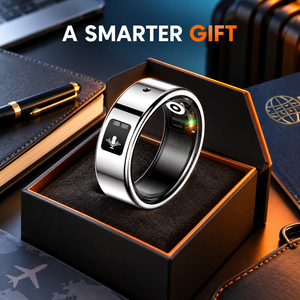
The global wearable technology market is experiencing a profound paradigm shift. As consumer preference transitions from bulky wrist-worn smartwatches to non-intrusive, aesthetically refined micro-form factors, the Smart Ring has emerged as the definitive frontier for continuous digital health monitoring, contact-free security, and ambient computing interfaces.
China has firmly established itself as the world's primary epicenter for smart ring engineering, component miniaturization, and high-volume manufacturing. By leveraging world-class micro-SMT (Surface Mount Technology) assembly lines, advanced resin vacuum conformal coating, and integrated sensor supply chains concentrated in Guangdong’s high-tech manufacturing corridors, top Chinese smart ring factories deliver unparalleled economies of scale, technological agility, and stringent compliance under ISO 13485 and ISO 9001 frameworks.
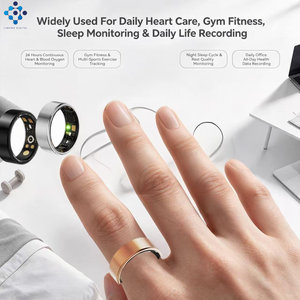
Information Gain Insight: Unlike standard smartwatches where movement artifacts frequently distort optical sensors, the palmar arteries on the underside of the human finger provide a substantially higher signal-to-noise ratio for Photoplethysmography (PPG). This biological advantage enables China-manufactured smart rings to achieve clinical-grade heart rate variability (HRV), continuous SpO2 readings, and core body temperature tracking in a package weighing less than 3 grams.
2. Technology & Engineering Development Trends (2026–2030)
Procurement directors and B2B brand owners must anticipate structural shifts in hardware architectures and software ecosystems to maintain competitive market positioning over the next half-decade. Leading Chinese manufacturers are focusing R&D efforts across five core technical pillars:
Biomedical Multi-Sensor Fusion
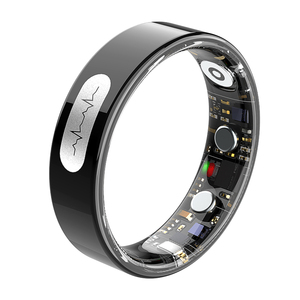
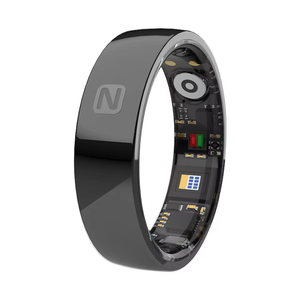
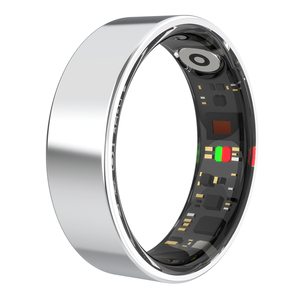
Integrating dual-wavelength PPG optical chips, bio-impedance sensors (ECG/EDA), and NTC thermistor arrays into sub-millimeter curved PCBs for continuous micro-vessel diagnostic analysis.
Material Science Breakthroughs
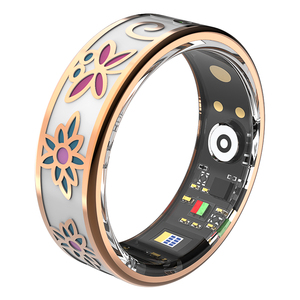
Transitioning from basic aluminum alloys to medical-grade Zirconia (ZrO2) micro-crystalline ceramics, Grade 5 Aerospace Titanium, and hypoallergenic resin inner-linings for all-day skin comfort.
Energy Density & Power Optimization
Implementation of high-density curved solid-state micro-lithium polymer batteries combined with BLE 5.3 ultra-low-power Bluetooth microcontrollers (Nordic nRF series) delivering 7 to 10 days of active battery autonomy.
Ambient Edge AI & Gesture Control
On-device machine learning algorithms enabling spatial gesture recognition (touchless short-form video navigation, smart home IoT triggering, and remote camera shutter control) alongside predictive AI sleep recovery engines.
Furthermore, research into non-invasive continuous glucose monitoring (CGM) via multi-spectral optical reflectance and blood pressure trend estimation using pulse arrival time (PAT) algorithms is actively being piloted across tier-1 Chinese R&D facilities, promising revolutionary product differentiation for B2B brands by late 2026.
3. Future Procurement & Global Sourcing Strategies for B2B Buyers
Sourcing smart rings requires an intricate evaluation of hardware assembly tolerances, firmware stability, intellectual property protection, and cross-border regulatory compliance. B2B buyers must navigate several evolving procurement dynamics:
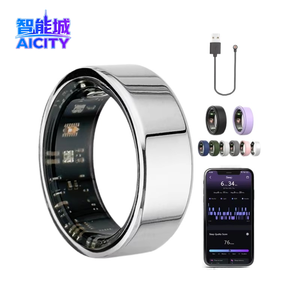
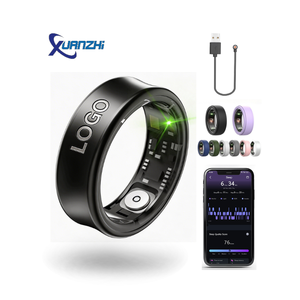
1. White-Label App Customization vs. Open SDK Integration: Enterprise buyers are moving away from rigid turnkey solutions toward flexible firmware ecosystems. Modern OEMs provide open Bluetooth API/SDK access, allowing health tech firms, insurance providers, and luxury consumer brands to seamlessly ingest raw telemetry data into their proprietary iOS/Android health platforms.
2. Micro-Sizing & Inventory Management: Unlike single-size smartwatches, smart rings demand precise finger sizing (US Sizes 6 through 13). Leading Chinese suppliers solve inventory bottleneck risks by offering customizable ring sizing kit packaging and flexible MOQ allocation across size matrix bundles, minimizing dead stock risks for retailers.
3. Waterproofing Engineering Standard (Resin Vacuum Potting): Traditional mechanical sealing is insufficient for smart rings subjected to daily handwashing, swimming, and thermal stress. Reliable manufacturers utilize 100% solid-resin vacuum potting injection, achieving authentic 5ATM and IP68 ratings that endure hydrostatic chamber pressure testing prior to shipment.
4. B2B Technical Sourcing Specification Matrix
Compare baseline engineering parameters across key OEM smart ring manufacturing tiers to select the optimal blueprint for your target brand positioning:
| Specification Category |
Standard Health Tracker |
Pro AI & ECG Series |
Luxury Ceramic / Titanium |
| Primary Materials |
316L Stainless Steel + Epoxy Resin |
Titanium Alloy (Grade 5) + Hypoallergenic Resin |
Micro-Crystalline Zirconia Ceramic + Gold PVD |
| Sensor Architecture |
Single Optical PPG (Green LED) + 3-Axis Accelerometer |
Dual Optical PPG (Red/Infrared) + ECG Electrodes + NTC Temp Sensor |
Multi-Spectral Optical PPG + 6-Axis Motion + EDA Stress Chip |
| Biometric Tracking |
Heart Rate, Sleep Duration, Step Counter |
HRV, SpO2, ECG Waveform, Sleep Stages, Skin Temp |
Continuous HRV, Stress Index, Recovery Rate, Women's Health |
| Waterproof Rating |
IP68 Waterproof |
5ATM (50m Hydrostatic Rating) |
5ATM / IP69K High Pressure Wash Proof |
| Battery Life & Charging |
15–20 mAh (4–5 Days), Magnetic Dock |
20–25 mAh (7–10 Days), Fast Magnetic Case |
18–22 mAh (6–8 Days), Wireless Qi Induction Charging |
| App & Cloud Support |
Standard White-Label App (Tuya/Custom) |
Custom Branded App + Apple Health/Google Fit Sync |
Enterprise Cloud SDK + Raw Data API Access |
| Compliance & Certs |
CE, RoHS, FCC |
CE, RoHS, FCC, REACH, WEEE |
Medical Device ISO 13485, CE-MDR Ready |
5. Factory Ecosystem Capabilities & Manufacturing Rigor
Partnering with an established Chinese OEM/ODM factory guarantees complete control over the entire product lifecycle—from initial industrial design (ID) and tooling construction to SMT surface mounting, firmware tuning, and final automated quality inspection.
EU-Ready Full Compliance
All production protocols are strictly aligned with European and North American retail requirements, including CE marking, RoHS hazardous substance restrictions, WEEE recycling directives, and FCC electromagnetic certification.
End-to-End Precision SMT & Assembly
State-of-the-art automated SMT lines support ultra-compact 0201 component placement, high-precision laser welding for outer metal rings, and automated optical inspection (AOI) ensuring zero defect assembly rates.
Omnichannel & Multilingual Packaging
Comprehensive B2B logistical support providing retail-ready multilingual documentation, localized user guides, customized branding artwork, and Amazon/e-commerce compliant barcode bundling.
Robust After-Sales & Warranty Support
Dedicated technical support hub, localized RMA spare parts allocation, firmware OTA update maintenance, and technical documentation to streamline customer service operations for enterprise clients.
6. Smart Ring B2B Procurement FAQ
Essential operational and technical responses tailored for commercial buyers, importers, and brand managers:
Q1: What is the typical Minimum Order Quantity (MOQ) for custom OEM smart rings?
Standard stock colorway evaluation orders start as low as 100 to 500 units. For full OEM custom branding (custom laser-etched logos, bespoke inner resin color tinting, and branded gift boxes), standard production MOQs range between 1,000 to 3,000 units depending on housing materials.
Q2: How do factories ensure accurate ring sizing for international consumer markets?
Factories produce standardized international sizing matrices (US Sizes 6 through 13). Buyers can order physical sizing ring sample kits for consumer pre-sizing, or bundle custom sizing card tools directly inside retail consumer packaging.
Q3: Can enterprise clients integrate smart ring health data into third-party software?
Yes. OEM partner programs provide comprehensive Android and iOS SDKs, along with RESTful cloud APIs. Raw sensor telemetry (PPG waveform data, 3-axis accelerometer values, skin temperature delta, HRV arrays) can be securely transmitted to private health portals or corporate wellness applications.
Q4: How are 5ATM and IP68 waterproof ratings tested during mass manufacturing?
Every single ring undergoes high-pressure vacuum leak testing followed by hydrostatic chamber submersion testing. The internal electronics are fully encased in solid optical-grade resin potting, preventing liquid ingress even under dynamic pressure during swimming or diving.
Q5: What is the lead time for OEM tooling and sample delivery?
Existing model samples with pre-loaded firmware ship within 3 to 5 business days. Custom cosmetic OEM samples (PVD coating colors, custom laser engraving) take 10 to 15 days. Full custom industrial design ID tooling and molding require 35 to 45 days.
Q6: Are the health tracking sensors on smart rings medically certified?
Smart rings manufactured for general consumer retail are categorized as wellness tracking devices. However, selected tier-1 factories operate under ISO 13485 quality management systems, enabling strategic partners to seek FDA 510(k) or CE-MDR medical device certification for specialized clinical models.