Featured Flagship Products & Commercial Appliances
Explore our export-grade kitchen equipment, precision electro-thermal systems, smart hardware, and professional small appliances engineered for international market compliance.
1. The Global Landscape of China's Espresso Machine Manufacturing & Export Capabilities
The global espresso machine market is experiencing a profound paradigm shift driven by the democratization of prosumer coffee culture, urban lifestyle upgrades, and rapid advancements in small appliance electro-thermal engineering. As international procurement directors, brand owners, and retail distributors analyze supplier capabilities, China has firmly established itself as the world’s primary hub for advanced espresso machine design, engineering innovation, and high-volume OEM/ODM manufacturing.
Historically known for entry-level thermoblock systems, China’s top espresso machine factories in manufacturing hotspots such as Guangdong (Shunde, Dongguan) and Zhejiang (Cixi, Ningbo) have evolved into world-class research and manufacturing centers. Today, these facilities produce sophisticated dual-boiler systems, high-precision PID-controlled extraction units, commercial-grade rotary pump machines, and smart IoT-enabled coffee appliances that strictly adhere to European and North American food-contact standards (LFGB, FDA) and electrical safety directives (CE, GS, UL, ETL, RoHS, WEEE).
Key Structural Advantage of Leading Chinese Exporters
Partnering with premier Chinese manufacturers gives global brands a competitive edge across the entire supply chain value matrix:
End-to-End Vertical Integration
From in-house precision aluminum die-casting and stainless steel deep-drawing to custom tooling and injection molding, top factories control every step to reduce production bottlenecks.
Advanced Extraction Fluidics
Integration of Italian-engineered ULKA pump systems, high-precision CEME solenoid valves, and swiss-made Digmesa flowmeters ensures exact volumetric dosing and steady extraction pressures up to 19 Bar.
Smart Digital Control Architecture
Microchip-driven NTC sensory arrays and PID loops maintain ideal brewing temperatures (90°C–96°C) while enabling real-time pre-infusion adjustment via user touchscreens or mobile apps.
2. Technical Deep-Dive: Core Engineering & Quality Benchmarks in Espresso Machine Sourcing
To evaluate a manufacturing partner effectively, B2B buyers must understand the internal technical architecture of modern espresso machines. Low-quality machines often suffer from temperature fluctuations, rapid scale buildup, pressure decay, and premature pump failure. High-tier Chinese export factories address these challenges through meticulous engineering and rigorous quality assurance.
A. Thermal Management & Heating Architecture
Thermal stability is the single most critical factor in achieving gold-standard espresso extraction. China's top factories manufacture three primary thermal architectures for global export:
- Cast-Aluminum Instant Thermoblocks: Coated with food-grade stainless steel fluid channels to prevent aluminum leaching, offering rapid 25-second heat-up times ideal for compact home espresso machines.
- Single & Dual Stainless Steel Boilers: Engineered using SUS304 or SUS316 food-grade steel with thick wall construction for superior thermal inertia, dedicated micro-boilers for brewing, and high-output steam generation for commercial cappuccinos and lattes.
- Hybrid Thermo-Coil Systems: Combining instant thermal delivery with digital PID feedback loops to ensure water temperature remains stable within ±0.5°C during the entire 25–30 second extraction phase.
B. Pressure Profiling & Hydraulic Integrity
The golden standard of espresso extraction requires a steady 9 Bar profile at the puck, requiring pumps capable of delivering 15 to 19 Bar peak pressure to compensate for hydraulic resistance. Leading exporters incorporate Over-Pressure Valves (OPV) that vent excess pressure back to the water reservoir, preventing over-extraction and bitter flavor profiles.
C. Grinding Dynamics & Integrated Conical Burrs
The market for all-in-one espresso machines featuring built-in burr grinders is growing rapidly. Leading factories integrate low-speed stainless steel or ceramic conical burr grinders with 30+ adjustable macro and micro-settings. Low RPM motors prevent heat transfer to coffee beans during grinding, preserving delicate aromatic volatile oils prior to brewing.
| Performance Tier | Thermal Architecture | Pump & Hydraulic Spec | Target Market Positioning | Compliance & Certifications |
|---|---|---|---|---|
| Entry / Compact | Single Thermoblock (Die-cast Al + Stainless Tube) | 15 Bar Vibration Pump (ULKA) | Budget Retail, E-Commerce Starter Kits | CE, GS, RoHS, REACH, CB |
| Mid-Range Prosumer | Dual Thermoblock / Single Boiler + PID Control | 15–19 Bar Pump + OPV Valve | Specialty Home Kitchens, Boutique Retail | CE, GS, ETL, FDA, LFGB, ERP |
| Commercial Grade | Dual Stainless Steel Boiler + E61 Grouphead | Commercial Rotary Vane Pump (9 Bar Constant) | Cafés, Offices, Professional Hospitality | NSF, CE, UL, ETL, Commercial Sanitation |
3. 2025–2030 Global Espresso Machine Sourcing & Procurement Trends
As consumer preferences change and smart home technologies advance, procurement teams must align their sourcing strategies with long-term technology trends. Drawing on industry trade data and global retail analytics, we highlight the four major procurement trends transforming small kitchen appliances and espresso equipment:
Trend 1: The Rise of IoT-Enabled Customization & Smart Telemetry
Commercial buyers are increasingly seeking IoT-integrated coffee equipment. OEM factories in China now provide embedded Bluetooth and Wi-Fi modules that connect to customized iOS/Android apps. Users can program pre-infusion duration, adjust PID temperature profiles, monitor water hardness, schedule automatic descaling, and order replacement parts directly through their mobile devices.
Trend 2: Sustainable Engineering & Energy-Saving Compliance (EU ErP Standard)
Environmental regulations in Europe (such as strict ErP energy consumption directives) require standby power to remain below 0.5W. Top Chinese factories lead this transition by replacing traditional energy-heavy boilers with high-efficiency instant heating modules, eco-mode auto-shutdown timers, and recyclable lead-free metallic alloys.
Trend 3: Compact Multi-Functional Hybrid Appliances
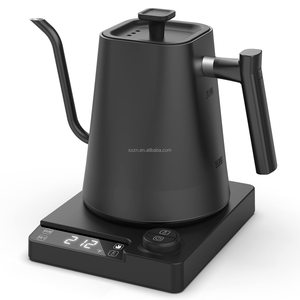
Urban living environments demand space-saving countertop appliances. We see growing demand for hybrid platforms that combine precision pour-over kettles, heavy-duty dough mixers, and compact espresso extraction modules into unified design families. Importers can create cohesive brand aesthetics by sourcing cross-category product lines from a single unified factory ecosystem.
Trend 4: Comprehensive Private Labeling & Flexible Modular OEM
To reduce time-to-market, global brand owners are shifting from completely custom tooling toward modular OEM platforms. Premier Chinese exporters offer customizable outer housing panels, customizable TFT touch screens, customized portafilter ergonomics, and specialized retail packaging options, enabling brand owners to launch unique SKUs in under 90 days.
4. Enterprise Strengths & Factory Audit Criteria for Global Importers
Selecting the right export partner requires assessing factory capabilities beyond basic product catalogs. To ensure long-term supply chain reliability, buyers should evaluate key manufacturing benchmarks during factory audits:
Rigorous Quality Assurance (QA/QC)
Leading factories operate IQC, IPQC, and FQC testing workflows. Every machine undergoes 100% high-voltage insulation tests, 19-bar hydraulic leak checks, and automated flow meter calibration before final packaging.
Multilingual & Export-Ready Packaging
Export products include drop-tested 5-layer corrugated retail boxes, clear feature callouts, eco-friendly protective molded pulp inserts, and multi-language manuals tailored for European and American retail markets.
Comprehensive After-Sales Support
To reduce return-handling costs for importers, top factories supply 1–2% spare parts (pumps, gaskets, PCBs), detailed troubleshooting documentation, and online technical training modules for customer support teams.
Frequently Asked Questions (FAQ) for Global Buyers
Clear answers to common questions about sourcing espresso machines, MOQs, custom branding, compliance certifications, and factory logistics.
What is the standard Minimum Order Quantity (MOQ) for OEM/ODM espresso machines?
For standard private label branding (custom logo printing and packaging artwork using existing factory molds), MOQ typically ranges from 500 to 1,000 units per model. For complete custom tooling or bespoke mechanical engineering (ODM), MOQs generally start at 2,000 to 3,000 units depending on plastic injection mold costs and electronic customization requirements.
How do Chinese factories ensure food safety compliance for coffee contact surfaces?
Reputable factories enforce strict raw material controls. Internal boilers are manufactured from high-grade SUS304/316 stainless steel or lead-free brass. Metallic fluid tubes, silicone seals, and plastic portafilters undergo independent laboratory testing to secure LFGB (European Union) and FDA (United States) food contact certifications, guaranteeing zero heavy metal leaching or toxic plastic releases.
What are the standard production lead times from sample approval to shipment?
Pre-production golden samples with custom branding are typically produced and delivered within 10 to 15 business days. Once samples are approved and initial deposit payments are cleared, mass production lead times generally average 35 to 45 days for initial orders, and 30 to 35 days for repeat orders.
Can factories customize electrical configurations for different international markets?
Yes. Chinese exporters build machines customized for global electrical standards, including 220V–240V 50Hz/60Hz (EU, UK, AU, Middle East) and 110V–120V 60Hz (North America, Japan). Factories provide regional plug types (EU VDE, US UL, UK BS, AU SAA) along with certified power cords.
How are warranty and post-sale technical support handled for overseas buyers?
Exporters typically provide a 12 to 24-month manufacturer warranty on core components (pumps, boilers, heating elements, control PCBs). Factories supply 1% to 2% complimentary quick-wear spare parts with every full-container load, along with technical repair manuals and online engineering support.
Ready to Expand Your Small Appliance & Espresso Machine Line?
Connect directly with our engineering team to request complete technical specifications, custom OEM/ODM pricing, and comprehensive product catalogs.