Buying Portable Coffee Makers wholesale can look simple until small details affect cost, quality, and customer satisfaction. A low unit price may hide fragile hinges, leaking seals, or expensive replacement filters. Wholesale buyers need a practical method that examines the entire product, not only its appearance.
Alan Adler, inventor of the AeroPress, has explained his design goal clearly: “I wanted to make great coffee quickly and easily.” That idea remains valuable for today’s buyers. A portable brewer should fit into a travel bag, work without complicated equipment, and produce consistent coffee in different settings. Product testing should include hot water, repeated brewing, cleaning, and transport. Small weaknesses often appear after several uses.
This guide presents ten useful tips for buying Portable Coffee Makers wholesale. It covers supplier verification, minimum order quantities, materials, brewing performance, packaging, customization, and after-sales support. Buyers should request samples before placing a large order. They should also check food-contact materials and review available quality documentation. These steps reduce avoidable risks, although they cannot guarantee perfect results.
Real purchasing decisions are rarely flawless. A supplier may offer excellent pricing but slow communication. Another may provide attractive packaging but inconsistent extraction. I have learned that convenience sometimes costs more than expected. Therefore, compare the complete purchasing experience, including shipping, defect handling, and replacement terms. Reliable wholesale buying requires patience, evidence, and a willingness to question attractive offers. The best choice is not always the cheapest one.
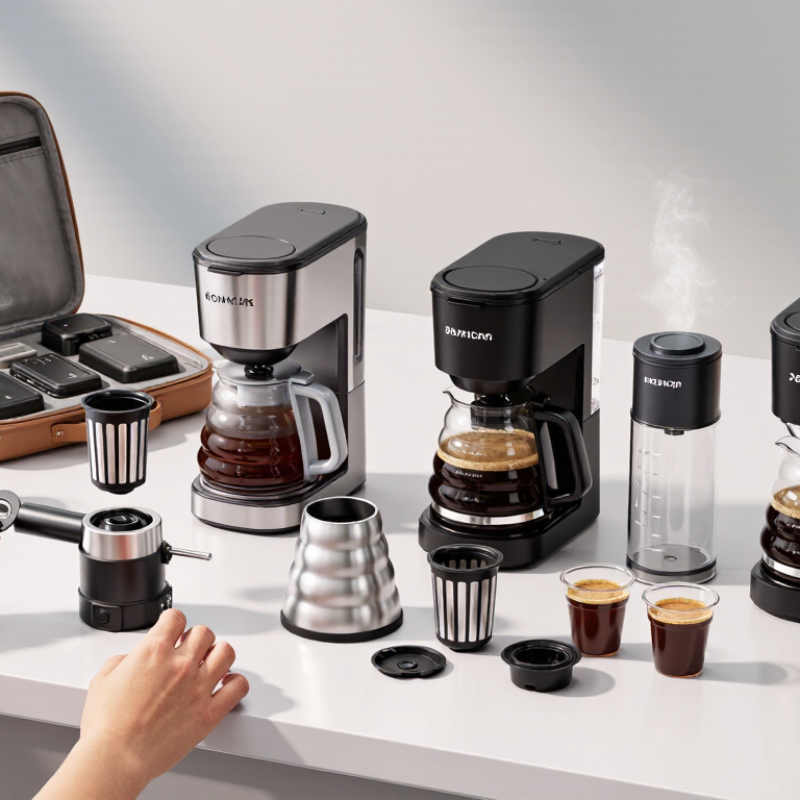
The portable coffee maker wholesale market is expanding beyond outdoor retail. Offices, travel shops, and gift distributors now seek compact brewing equipment. Buyers should study capacity, brewing time, power sources, and cleaning needs before discussing price. A low unit cost can hide weak seals, expensive returns, or difficult replacement parts. Forecasts are imperfect. Test demand carefully.
Tip 1: Compare at least three suppliers. Review factory experience, production capacity, and quality-control records.
Tip 2: Request samples from different production batches. One sample proves little.
Tip 3: Check food-contact materials, electrical documentation, and battery shipping requirements for your target markets.
Tip 4: Calculate landed cost, including packaging, freight, duties, inspection, and storage.
Tip 5: Ask for clear warranty terms and spare-part availability.
Tip 6: Inspect the filter, lid seal, and charging port after repeated use.
Tip 7: Choose packaging that protects glass and reduces unnecessary volume.
Tip 8: Confirm minimum order quantities match your cash flow.
Tip 9: Negotiate staged deliveries instead of filling one crowded warehouse.
Tip 10: Compare supplier communication during a small trial order. Slow replies may become serious after payment.
I once underestimated carton size, and storage costs erased the expected margin. That mistake changed my buying process. Reliable wholesale decisions come from testing, documentation, and realistic demand estimates.
Wholesale buying starts with a clear product brief, not a large order. Define brewing method, capacity, heat source, materials, and cleaning steps. A 300-milliliter brewer may suit commuters, while campers may need a sturdier 500-milliliter option. Ask how customers actually prepare coffee at work, in cars, or outdoors. Their routines matter more than attractive specifications. Keep notes from interviews, store feedback, and small test sales.
Target customers also reveal acceptable price, weight, brewing time, and maintenance effort. Office users often value quiet operation and simple storage. Travelers may prioritize leak resistance, compact dimensions, and access to replacement parts. Measure these preferences instead of guessing from online trends. I once treated “portable” as a single need. That assumption was weak. Some buyers wanted lightweight equipment, but others accepted extra weight for stronger insulation. A wholesale buyer should compare at least three customer groups before setting quantities.
Request samples from potential suppliers and test them with ordinary coffee grounds. Record brew time, liquid temperature, seal performance, and cleaning difficulty. Do not trust a polished product sheet alone. Check material documentation, safety instructions, warranty terms, and consistent quality across samples. Small defects become expensive when multiplied across cartons. Leave room for honest uncertainty. Demand may shift after a season, and your first forecast may be wrong. A smaller trial order can expose weak assumptions before inventory fills the warehouse.
Portable coffee demand is substantial. The National Coffee Association’s Spring 2024 report found that 67% of U.S. adults drank coffee the previous day. The International Coffee Organization reported global consumption of about 177 million 60-kilogram bags in 2022/23. That volume rewards careful sourcing, not rushed purchasing.
Begin with supplier evidence. Request a factory audit, production photos, and a recent quality-control record. Demand a pre-production sample. Test its seal, pump pressure, filter fit, and heat retention. Check food-contact materials, including silicone gaskets and plastic reservoirs. Ask for batch numbers and traceability records. Small parts matter.
Certifications require close reading. Verify whether testing covers the finished product, not only raw materials. Request laboratory reports for food-contact safety and electrical protection, when applicable. Match documents with destination-market requirements, such as FDA food-contact rules or European Regulation 1935/2004. ISO 9001 can indicate controlled processes, but it does not prove product safety. Ask whether the certificate remains valid. Confirm the issuing body independently.
Review sampling procedures and defect thresholds. Inspect ten units, not one. I have seen attractive samples hide inconsistent threads and loose lids. That mistake is expensive. Compare warranty terms, replacement rates, packaging strength, and landed cost. Suppliers should explain corrective actions clearly. If answers remain vague, pause the order. Credibility is visible in records, not promises.
| No. | Buying Tip | What to Evaluate | Practical Benchmark or Requirement | Documents or Checks to Request |
|---|---|---|---|---|
| 1 | Verify supplier capability | Confirm whether the supplier has a documented quality system, traceable production records, and experience with the target sales market. | Prefer suppliers able to provide a current quality-management certificate, production flow chart, inspection procedure, and batch traceability process. | Quality certificate, factory profile, process map, sample inspection records, and production photographs or audit access. |
| 2 | Assess material safety | Check all parts that contact coffee or water, including the brew chamber, seals, tubing, filters, valves, and internal coatings. | Food-contact materials should comply with the legal requirements of the destination market; materials should be identified by type and supplier declaration. | Food-contact declaration, material specifications, migration-test reports, and a component list identifying every wetted part. |
| 3 | Inspect manufacturing quality | Review molding quality, surface finish, assembly alignment, seal compression, burrs, loose parts, and consistency between production samples. | Require an approved pre-production sample and a written acceptance standard covering appearance, dimensions, function, and packaging. | Golden sample, inspection checklist, dimensional tolerances, defect classification, and pre-shipment inspection report. |
| 4 | Test brewing performance | Measure extraction consistency, water delivery, operating temperature, brewing time, leakage resistance, and ease of cleaning. | Use a repeatable test method and compare multiple units from the same batch; published performance claims should be supported by test data. | Test protocol, results from several units, temperature records, cycle-time data, leakage test, and cleaning instructions. |
| 5 | Check electrical safety | For powered models, evaluate insulation, grounding or double insulation, overheating protection, charger compatibility, and protection against abnormal operation. | Electrical products should be tested against the applicable safety standard for the destination market and product architecture. | Electrical safety test report, rated voltage and power information, wiring diagram, charger specification, and user manual. |
| 6 | Review battery compliance | For rechargeable models, verify cell traceability, battery-management protection, charging behavior, transport classification, and replacement policy. | Lithium-battery shipments commonly require UN 38.3 test evidence; the battery pack should include overcharge, over-discharge, overcurrent, and short-circuit protection where applicable. | UN 38.3 test summary, battery specification, safety data sheet where required, charger test report, and battery traceability records. |
| 7 | Confirm regulatory requirements | Identify requirements based on destination, power source, radio functions, materials, packaging, and waste or chemical restrictions. | Check applicable food-contact, electrical, electromagnetic compatibility, RoHS, REACH, and battery obligations rather than relying on a generic certificate. | Market-specific compliance matrix, declarations of conformity, laboratory reports, restricted-substance statement, and labeling artwork. |
| 8 | Evaluate durability | Test hinges, handles, charging ports, lids, seals, buttons, carrying cases, and repeated brewing cycles under normal use conditions. | Set a written cycle-test target appropriate to the design and require failure analysis for cracked, warped, leaking, or non-functioning units. | Life-test plan, cycle-test results, drop or vibration test results where relevant, warranty terms, and corrective-action records. |
| 9 | Compare total landed cost | Calculate product price together with tooling, testing, packaging, freight, duties, spare parts, warranty replacements, and payment terms. | Compare quotations using the same specification, order quantity, delivery term, packaging level, inspection scope, and warranty coverage. | Formal quotation, costed bill of materials, packaging dimensions, minimum order quantity, lead time, Incoterm, and warranty policy. |
| 10 | Control the first order | Use staged approval: sample review, pilot order, production inspection, shipment release, and post-delivery performance monitoring. | Define measurable acceptance criteria, reserve the right to inspect before shipment, and record field defects by batch and failure type. | Purchase specification, approved sample, inspection plan, corrective-action procedure, spare-parts list, and after-sales service agreement. |
Wholesale buying starts with comparable numbers, not attractive unit prices. The National Coffee Association’s Spring 2024 report found that 67% of American adults drank coffee the previous day. That demand supports volume, but unsold stock still ties up cash.
Tip 1: Request identical specifications from every supplier. Tip 2: Compare landed cost, including freight, duties, packaging, and inspection. Tip 3: Build a price table at 50, 100, and 500 units. Tip 4: Check whether accessories change the quoted price. Tip 5: Ask for written pricing validity. Raw materials and freight can move quickly. Tip 6: Negotiate MOQ by testing a smaller pilot order. A low MOQ may carry a higher unit cost, but it reduces inventory risk.
Payment terms deserve equal attention. Tip 7: Compare deposits, balance dates, and currency charges. Tip 8: Prefer milestone payments linked to production evidence and inspection. Tip 9: Calculate cash needed before resale revenue arrives. The U.S. Small Business Administration advises careful cash-flow planning, especially for inventory-heavy businesses. Tip 10: Confirm remedies for late delivery or defective units. Terms sound simple until a shipment is late.
The Specialty Coffee Association emphasizes consistency, usability, and quality control across coffee equipment. Apply that principle to wholesale samples. Brew several cups, check heat retention, and inspect seals after cleaning. I once treated a cheaper quote as the better deal. That was a mistake. The missing replacement parts created delays, and the “saving” disappeared. Supplier references, inspection records, and clear invoices provide stronger evidence than promises.
Wholesale buyers should test portable coffee makers before approving a large order. The International Coffee Organization reported global coffee consumption of about 177.9 million 60-kilogram bags in 2022/23. Demand is broad, but product expectations are specific. Test brewing speed, water leakage, battery endurance, heat retention, and cleaning effort. Use samples from different production batches. One perfect sample proves very little.
Shipping needs equal attention. UNCTAD states that more than 80% of global merchandise trade by volume moves by sea. Confirm carton compression strength, moisture protection, and internal cushioning before dispatch. Drop-test packed units from several angles. Check lithium-battery documentation when applicable. I once underestimated corner damage. The cartons looked acceptable, but several lids arrived scratched. That mistake required better edge protection and clearer loading instructions.
Storage conditions can quietly create defects. Keep units away from direct sunlight, standing water, and extreme temperature changes. Record warehouse humidity and inspect seals monthly. Maintain batch numbers for faster recalls or replacements. After-sales support should include spare seals, simple cleaning instructions, and a response-time promise. The Zendesk Customer Experience Trends Report 2024 found that 73% of consumers would switch to a competitor after multiple poor service experiences. Provide multilingual troubleshooting videos and a practical warranty process. Do not promise instant replacement unless inventory can support it.
This planning benchmark shows a practical allocation of attention across product testing, shipping, storage, after-sales support, and compliance preparation when purchasing portable coffee makers wholesale. Testing and logistics receive the highest priority because they directly affect product reliability, delivery performance, and customer satisfaction.
Specify brewing method, capacity, heat source, materials, and cleaning steps. A 300-milliliter model may suit commuters. Campers may prefer 500 milliliters and stronger insulation. Customer routines matter more than attractive specifications.
Compare commuters, office users, and travelers. Measure acceptable price, weight, brewing time, storage space, and maintenance effort. Office users may want quiet operation. Travelers may prioritize leak resistance and replacement parts. Three groups are better than one guess.
Use ordinary coffee grounds with samples from different batches. Record brewing time, liquid temperature, seal performance, and cleaning difficulty. Test loose lids and filter fit. One perfect sample proves very little.
Request factory evidence, production photos, quality-control records, and pre-production samples. Ask for batch numbers and traceability records. Review warranty terms and replacement rates. Records matter more than promises.
Confirm that reports cover the finished product, not only raw materials. Review food-contact materials, electrical protection, and destination-market requirements. Check certificate validity independently. A process certificate does not prove complete product safety.
Check carton compression strength, moisture protection, and internal cushioning. Drop-test packed units from several angles. Inspect corners, lids, and seals after testing. Damage often hides at the edges.
Keep units away from sunlight, standing water, and extreme temperature changes. Record warehouse humidity. Inspect seals monthly. Maintain batch numbers for easier replacements or recalls. Storage defects can appear quietly.
Provide spare seals, simple cleaning instructions, multilingual troubleshooting videos, and a clear warranty process. Set a realistic response time. Do not promise instant replacement without enough inventory. My first forecast may be wrong.
Buying Portable Coffee Makers wholesale requires more than simply choosing the lowest price. Start by understanding market demand, preferred product types, and the needs of your target customers, such as travelers, office workers, outdoor enthusiasts, or small retailers. Define essential requirements including brewing capacity, power source, portability, materials, ease of cleaning, and packaging. A clear product profile helps you select items that match customer expectations and reduces the risk of unsuitable inventory.
When evaluating suppliers, review manufacturing consistency, quality control procedures, product safety documentation, and relevant certifications. Compare unit prices alongside minimum order quantities, payment terms, production schedules, and potential customization costs. Before placing a large order, arrange product samples and testing to assess performance, durability, leakage resistance, and user convenience. Finally, plan shipping, warehouse storage, inventory protection, and after-sales support in advance. Reliable communication and a practical return or replacement process can improve customer satisfaction and support long-term wholesale growth.