China has become a major sourcing base for Air Fryers, serving brands, retailers, and distributors worldwide. Its supplier landscape includes large appliance manufacturers, specialized kitchen-equipment factories, and flexible private-label producers. However, a polished catalog does not prove dependable performance.
Food scientist Dr. Barry Swanson explains, “An air fryer is essentially a small convection oven.” This simple observation matters when comparing suppliers. Buyers should examine heating stability, airflow design, basket coating, noise levels, energy use, and cooking consistency. A crisp result in a showroom sample is not enough. The real test is repeated cooking with frozen fries, chicken wings, vegetables, and uneven food loads.
This guide introduces China’s top 10 Air Fryer suppliers for global buyers. It considers manufacturing experience, product range, export capability, quality systems, customization support, and after-sales communication. It also highlights practical details, including factory scale, sample responsiveness, packaging quality, and minimum order expectations.
Trust requires evidence.
Supplier websites can be incomplete. Some specifications may change without clear notice. Therefore, buyers should request current test reports, production samples, audit records, and written warranty terms before placing large orders. Compliance requirements also differ between markets, so independent verification remains essential.
The ranking is not absolute. A supplier suitable for a supermarket chain may not suit a startup brand. Cost can be attractive, but poor temperature control or fragile packaging may erase the savings. This overview aims to make comparison easier while acknowledging one uncomfortable truth: supplier information is rarely perfect. Careful questioning still matters.
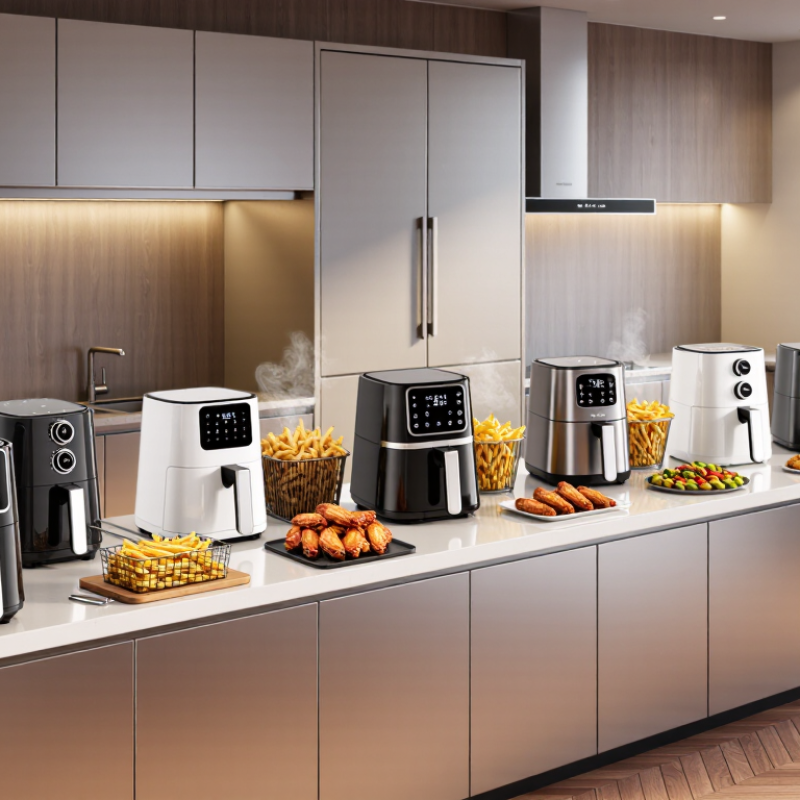
For global buyers comparing China’s top air fryer suppliers, reliability begins beyond attractive product photos. An experienced supplier should explain heating performance, airflow design, basket materials, and production capacity clearly. During sample evaluation, check temperature stability, handle strength, coating consistency, and noise levels. Small details matter.
A dependable factory provides traceable quality records, clear inspection procedures, and current test reports from qualified laboratories. Documents should match the exact model, voltage, plug, and materials ordered. Ask how often production lines are checked. Ask who approves the final shipment. Vague answers are warning signs. The supplier should also understand applicable market requirements, labeling rules, electrical safety expectations, and packaging standards.
Communication reveals practical experience. Reliable teams confirm specifications in writing and report delays before they become expensive problems. They can discuss minimum order quantities, lead times, spare baskets, replacement parts, and warranty handling without avoiding difficult questions. A pre-shipment inspection is useful, but one approved sample cannot prove every batch will be consistent. That is an uncomfortable limitation. Buyers should consider independent inspections and keep written quality standards. Low pricing may look efficient, yet weak packaging or unstable heating can create higher returns later. A supplier worth trusting accepts reasonable audits, corrects defects transparently, and supports improvement after delivery. Mistakes can happen. Hiding them is the real concern.
What Defines a Reliable Air Fryer Supplier in China?
This editorial benchmark shows the recommended importance of key supplier-selection criteria for global air fryer buyers. Product quality and safety compliance receive the highest weights because they directly affect consumer safety, market access, and long-term product performance. Delivery reliability, after-sales support, and customization capability are also important when evaluating potential suppliers.
Benchmark weights are presented as a practical buyer-evaluation framework, not as company-specific performance data.
China’s leading air fryer suppliers serve international buyers with varied factory capabilities. Their strength often lies in flexible production, competitive pricing, and practical customization. Experienced suppliers can adjust basket sizes, control panels, heating systems, and packaging for different markets.
A serious supplier should provide clear specifications before quoting. Check cooking capacity, rated power, voltage, frequency, plug type, and temperature accuracy. Ask for sample testing under real kitchen conditions. Samples reveal more. Observe heating consistency, handle stability, coating quality, and noise during operation. A factory may show a polished sample, yet mass production can differ.
Factory audits add valuable evidence. Review production lines, incoming material checks, assembly records, and final inspection procedures. Request test reports for electrical safety, food-contact materials, and applicable market requirements. Confirm carton dimensions, drop-test results, spare-part support, and realistic lead times. Do not rely only on online images. A video call can reveal packaging areas, worker flow, and quality checkpoints. Details matter. Some suppliers communicate quickly but document poorly, which creates avoidable risks. Others have excellent engineering teams but limited experience with overseas after-sales service. Buyers should compare these weaknesses openly, not hide them behind a low unit price. A written agreement should define tolerances, inspection standards, payment stages, and responsibility for defects. Pricing is important, but consistent quality protects a long-term distribution plan.
China’s leading air fryer suppliers serve private-label buyers, distributors, and kitchen appliance retailers worldwide. A useful comparison begins with product range and factory evidence. Their portfolios usually include basket air fryers, dual-zone models, oven-style units, and compact travel sizes. Some factories add visible windows, removable cooking plates, dehydration modes, and low-noise fans. Capacity matters. Look for clear production records, stable component sourcing, and documented quality inspections.
Manufacturing strength becomes visible through testing, not attractive catalogs. Reliable suppliers perform thermal cycling, electrical safety checks, coating adhesion tests, and repeated basket-use trials. Many operate assembly lines with automated screwdrivers, leak testing tools, and final-function inspection stations. Buyers should request batch records, sample reports, and traceability codes. Factory audits also reveal uncomfortable details, such as crowded storage areas or inconsistent inspection habits. These weaknesses deserve direct questions.
Customization services can cover housing colors, control panels, packaging, accessories, recipes, and user manuals. Engineers may adjust wattage, basket dimensions, touchscreen layouts, or heating programs for different markets. Experienced teams provide prototype samples before mass production. They should also explain tooling costs and minimum order quantities clearly. Not every supplier handles small revisions well. A beautiful sample can hide slow communication or unstable bulk production. Confirm pilot orders, spare-part support, and after-sales response times in writing.
China’s top air fryer suppliers are often evaluated by testing discipline, not attractive catalogs. Experienced buyers should request valid certificates for each model and production site. Common documents include CE, RoHS, UKCA, CB, and EMC test reports, depending on the destination market. Certification scope matters. A certificate for one heating system may not cover another capacity or control panel.
Reliable factories usually operate under ISO 9001 quality systems and maintain incoming material records. Ask for evidence of temperature testing, insulation checks, leakage-current testing, and repeated cooking-cycle trials.
Sample inspections should examine the basket coating, handle strength, power cord, plug type, and digital display. Small details matter. A loose connector can create expensive returns.
Export capability also requires practical proof. Suppliers should provide carton drawings, pallet plans, barcode support, multilingual manuals, and clear shipping documents. Their teams should understand Incoterms, container loading, lead times, and destination-specific labeling.
Factory audits and pre-shipment inspections add useful independence. Still, paperwork can look impressive while production varies between batches. I would compare a recent sample with the approved specification and retain photos from every inspection.
No supplier is perfect. A transparent response to defects may reveal more professionalism than a flawless presentation.
Global buyers should evaluate suppliers beyond catalog prices and polished factory photos. Grand View Research estimated the global air fryer market at about USD 1.9 billion in 2023, with strong growth expected through 2030. This expansion attracts experienced manufacturers and weaker traders. Ask for factory ownership details, production capacity, export records, and recent customer references. A video tour is useful, but an independent audit is stronger.
Request samples from the same production line, not specially prepared units. Check heating consistency, basket coating, hinge strength, noise, plug compatibility, and cleaning access. Review test reports against applicable electrical and food-contact requirements in each destination market. Confirm whether reports cover the exact model, materials, and factory. They often do not. Small details matter, especially insulation, thermal cutoffs, and cable quality.
Compare total landed cost, not just the quoted unit price. Include tooling, packaging, inspections, spare parts, shipping, and warranty handling. Supplier payment terms also reveal commercial maturity. A low minimum order can help market testing, but it may increase unit cost. Grand View Research identifies product innovation and household convenience as key market drivers, so assess firmware, user instructions, and after-sales responsiveness. No supplier evaluation is perfect. I would keep a scored comparison sheet, document every promise, and reserve a final inspection before shipment.
Common options include basket, dual-zone, oven-style, and compact travel models. Some include viewing windows, dehydration modes, or quieter fans. Capacity should match your market.
Request production records, sample reports, and traceability codes. Check thermal cycling, electrical safety, coating adhesion, and repeated basket-use testing. Attractive catalogs prove very little.
Inspect storage areas, assembly lines, inspection stations, and material records. Look for crowded spaces or inconsistent checks. These details may feel uncomfortable, but they matter.
Suppliers may customize colors, control panels, packaging, accessories, recipes, and manuals. Engineers can adjust wattage, basket size, displays, and heating programs. Confirm tooling costs and order quantities early.
Ask for certificates and test reports covering the exact model and factory. Relevant documents may include electrical safety, material compliance, and electromagnetic testing reports. One certificate may not cover every version.
Test heating consistency, coating quality, handle strength, hinge movement, noise, and cleaning access. Check the plug, cable, insulation, and thermal protection. Test real use, not just appearance.
Calculate the total landed cost, including tooling, packaging, inspections, spare parts, shipping, and warranty handling. A low unit price can hide expensive support problems. Numbers can mislead.
Request carton drawings, pallet plans, barcodes, multilingual manuals, and shipping documents. Confirm lead times, loading plans, trade terms, and destination labeling. Keep every promise in writing.
Compare samples from normal production lines, not specially prepared units. Use an independent audit and a final shipment inspection. I would also retain photos and batch records. Mistakes still happen.
China has become a major sourcing destination for Air Fryers, offering a wide range of suppliers with strong manufacturing capabilities, flexible production capacity, and experience serving international markets. A reliable supplier should demonstrate stable product quality, transparent communication, consistent delivery performance, and the ability to support different order volumes. Leading manufacturers may provide multiple models, including compact household units, multifunctional appliances, and customized designs for specific market needs. Their services can include appearance development, packaging design, technical adjustments, and private-label production without mentioning specific brands.
Global buyers should carefully review a supplier’s manufacturing facilities, quality-control procedures, product testing records, and relevant certifications required in their target markets. Export experience, documentation accuracy, after-sales support, and supply-chain stability are also important factors. By comparing product specifications, production samples, customization options, minimum order quantities, lead times, pricing, and communication efficiency, buyers can identify a suitable Chinese supplier and build a reliable, long-term cooperation based on quality, compliance, and mutual trust.