China’s kitchen-robotics sector is moving beyond novelty. In 2026, manufacturers compete on practical details: whether a robot can chop vegetables evenly, stir a thick sauce without splashing, and clean its cooking bowl without a long teardown. For buyers, these everyday tasks matter as much as advertised functions. A crowded feature list is not proof of dependable performance.
This guide compares ten Chinese manufacturers through a buyer-focused lens: product range, automation, ease of cleaning, safety features, production capability, and support. Kitchen Robots vary widely, from compact countertop cookers to more integrated systems designed for commercial kitchens. The right choice depends on menu, batch size, available space, and the skills of the people using it. A glossy demonstration may hide awkward loading or slow cleanup. That deserves scrutiny.
“Reliable kitchen automation is measured by repeatable results, not by the number of functions,” says Dr. Maya Chen, a kitchen-robotics industry analyst. Treat that statement as a practical evaluation principle, not a substitute for product testing. Manufacturer specifications can change, and performance claims should be checked against current documentation and hands-on trials. Some comparisons remain imperfect: public data on durability and after-sales service is not always consistent. The rankings therefore aim to inform, not to declare one machine best for every kitchen.
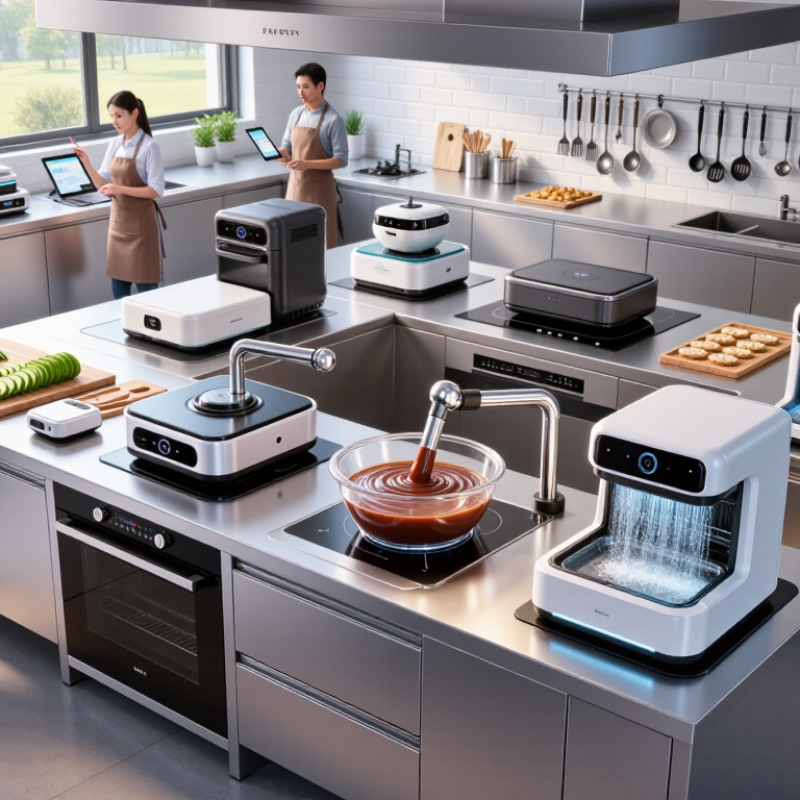
Kitchen robots are machines that automate repeatable food-preparation tasks, from weighing ingredients and stirring sauces to kneading dough and washing dishes. In commercial kitchens, larger systems may portion ingredients, cook batches, or move trays between workstations. A countertop model might chop vegetables into a steel bowl; a restaurant unit may dispense measured portions during a busy service. Different jobs, different machines.
Their value is consistency and saved labor, not magic. A robot still needs clean ingredients, correct settings, and regular cleaning. The International Federation of Robotics reported nearly 205,000 professional service robots sold worldwide in 2023, up 30% from 2022. That figure covers many industries, not kitchens alone, so it should not be treated as a kitchen-robot sales estimate. Still, it shows automation expanding across service work. In kitchens, buyers should assess batch size, cleaning time, safety features, and whether staff can recover quickly when a recipe or ingredient changes. Small details matter. A machine that saves stirring time but takes twenty minutes to wash may not improve the shift. And automation can feel awkward at first. Teams need practice before the promised efficiency appears.
Kitchen robots that cook food should use a food thermometer to verify internal temperature. USDA guidance recommends 74°C for poultry, 71°C for ground meat, and 63°C for fish and whole cuts of beef, pork, and lamb. Whole cuts require a 3-minute rest after reaching 63°C.
China’s kitchen robot industry in 2026 reflects a broad manufacturing base, from motor and sensor suppliers to assembly and testing facilities. This ecosystem can support varied product designs, including countertop machines that chop, stir, weigh, and heat ingredients. For buyers, the practical question is not simply how many functions a machine offers. Consistent temperature control, stable mixing, and easy cleaning matter more during daily use.
The landscape is not perfectly even. Suppliers may differ in engineering depth, component traceability, and their ability to maintain quality across production runs. A product demonstrated with a thick soup may behave differently with a small batch of chopped vegetables. Ask for test records, realistic operating samples, and clear details about maintenance and spare parts. Strong documentation helps, but it cannot replace hands-on evaluation.
A useful comparison starts with evidence, not polished product photos. Manufacturers are screened through public company records, product specifications, factory information, and available quality documentation. The review checks whether each company actually develops or produces kitchen robots, rather than simply reselling finished equipment. Clear evidence matters.
The comparison then considers engineering depth, product range, and manufacturing capacity. Reviewers examine practical details: motor performance, temperature control, bowl capacity, cleaning access, and the availability of replacement parts. Testing a machine with thick dough or repeated heating cycles can reveal weaknesses that a brochure may miss. Not every model is equally easy to assess.
After-sales support, customization, delivery consistency, and documented quality systems also affect the evaluation. These factors are compared using the same criteria, with stronger weight given to verifiable information than promotional claims. Public certifications and service policies can help, but they do not guarantee a trouble-free purchase. The method is useful, not flawless. Factory conditions and supplier relationships can change, while some production data remains difficult to confirm. Scores should therefore be read as structured guidance, not a promise of future performance.
China’s kitchen robot sector includes manufacturers with very different strengths. These ten profiles describe useful areas to compare, rather than a verified sales ranking. One manufacturer may focus on compact cooking units for small apartments. Another may build large-capacity machines for busy family kitchens. A third may specialize in precise heating and temperature control. Details matter.
Other profiles include a manufacturer known for sturdy mixing mechanisms, one offering modular attachments, and one designing clear touchscreen controls. A sixth may prioritize quiet motors for open-plan homes. A seventh may develop easier-to-clean bowls and removable parts. An eighth may focus on connected recipes and software updates. A ninth may supply commercial kitchens, where machines face longer operating hours. The tenth may serve export markets with configurable products and established service processes.
Buyers should examine more than product photos. Ask for capacity figures, material specifications, safety documentation, warranty terms, and access to replacement parts. Request a live demonstration with a thick dough or a hot soup cycle. Watch for uneven mixing, splashes, awkward cleaning, or controls that feel confusing. These observations reveal practical strengths, though a short demo cannot prove long-term durability. Public rankings also change, and claims should be checked against current records. A credible manufacturer can explain its testing methods and provide clear, consistent technical information.
China’s top kitchen robot manufacturers in 2026 compete through products, technology, and dependable market support. Their portfolios include cooking robots, mixing systems, automated woks, and compact food processors. Strong manufacturers combine precise heating, torque control, weighing sensors, and recipe software. Some machines adjust temperature within seconds, helping protect sauces from burning. Others use modular parts for easier cleaning and maintenance.
Market strength depends on more than production volume. Leading manufacturers often provide multilingual interfaces, stable spare-part supply, operator training, and responsive service teams. Their factories may use automated assembly and repeated quality checks, but results can still vary between product batches. I would examine warranty records, test reports, and long-term user feedback before trusting a sales claim. No manufacturer leads every category. That matters.
Tips: Compare motor power under real kitchen loads, not empty-bowl demonstrations. Check whether food-contact parts are removable and easy to inspect. Ask for noise measurements, cleaning instructions, and software update policies. A reliable supplier should explain limitations clearly. Test local recipes, portion sizes, and peak-hour workloads before purchasing. Small trials often reveal issues that brochures hide.
It may chop, stir, weigh, and heat ingredients on a countertop. Daily consistency matters more than a long feature list.
Check temperature control, mixing stability, bowl capacity, and cleaning access. A thick soup test alone may not reveal everything.
Use recipes you actually make. Try small vegetable batches, thick dough, and repeated heating cycles.
Check whether the bowl, blades, and seals come apart easily. Food residue in narrow gaps can become a practical nuisance.
Review test records, company information, factory details, and quality documents. Paperwork helps, but hands-on testing still matters.
No. Results may differ between production batches, so ask about traceability and repeated quality checks. That matters.
Check spare-part availability, maintenance guidance, operator training, warranty records, and software updates. Clear answers are useful.
No. They offer structured guidance, not certainty. Factory conditions and supplier relationships can change, and some details may be hard to verify.
This article presents a practical overview of China’s Kitchen Robots industry in 2026, explaining what these machines are and how they support food preparation in homes, restaurants, catering businesses, and commercial kitchens. It explores their main functions, including automated cooking, stirring, steaming, weighing, temperature control, cleaning assistance, and intelligent recipe management. The discussion also considers how changing consumer habits, labor needs, smart-home adoption, and manufacturing capabilities are shaping the industry’s development.
The article then introduces a structured method for comparing the top ten Chinese kitchen robot manufacturers, focusing on product reliability, technological innovation, production capacity, safety design, customization services, market coverage, and after-sales support. Each manufacturer profile examines its product categories, technical strengths, application scenarios, and competitive advantages without relying on brand promotion. Together, these comparisons provide readers with a clear understanding of China’s 2026 kitchen robot landscape and the factors that may influence purchasing, cooperation, and future industry growth.