Cordless Stick Vacuums promise quick cleanups without a cord trailing behind you. Yet a lightweight body does not guarantee strong pickup, and impressive suction figures rarely tell the whole story. Battery runtime, floorhead design, filtration, and replacement-part costs matter in everyday use. A vacuum that glides over crumbs may still struggle with pet hair caught deep in a rug.
The market is growing. Grand View Research estimated the global vacuum cleaner market at USD 14.64 billion in 2023 and projected continued growth through 2030. That figure covers more than cordless stick models, so it is useful context—not proof that every new vacuum is better. Independent testing matters, too. Consumer Reports evaluates vacuum performance across practical tasks, including bare-floor and carpet cleaning.
James Dyson’s design philosophy offers a useful reminder: “Enjoy failure and learn from it. You can never learn from success.” A shortlist should reflect that spirit. This guide compares ten cordless models by cleaning performance, battery life, handling, and ownership costs, while noting where a feature may disappoint. Convenience matters. So does honest testing. No single pick suits every home; a small apartment, thick carpets, and a shedding dog create very different demands. We may also place too much weight on specifications. Real floors can be less predictable.
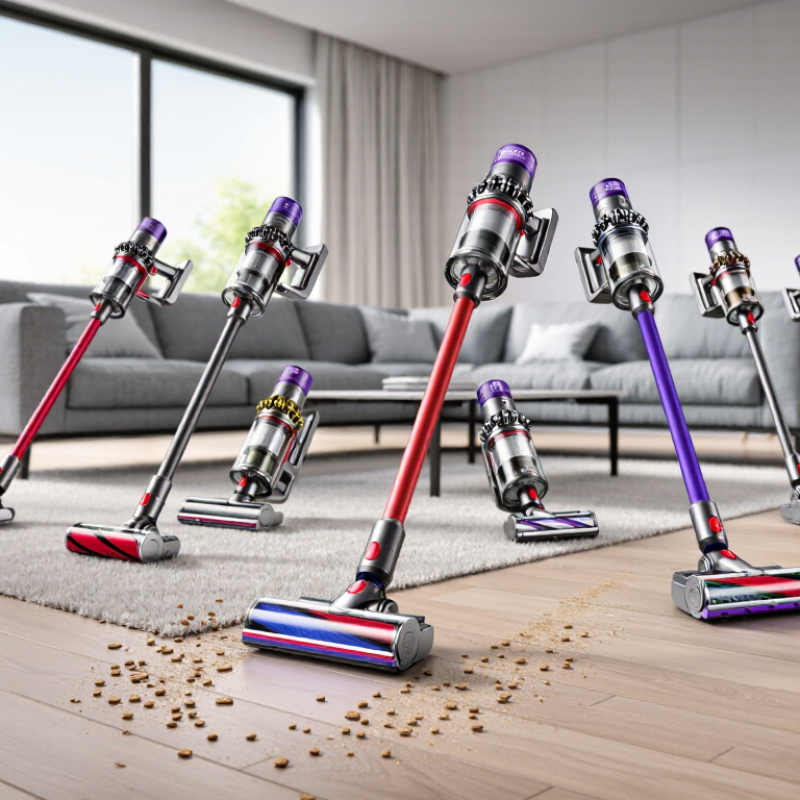
A cordless stick vacuum is a lightweight floor cleaner powered by a rechargeable battery instead of a wall outlet. Its slim handle connects a motor, dust container, and cleaning head. Inside the head, a rotating brush can loosen crumbs and hair from carpet, while suction pulls debris into the bin. Air passes through filters that capture much of the fine dust before it exits. The exact airflow and filtration design varies between models.
Simple idea.
Press the power switch, and the battery supplies energy to the motor and, usually, the brush. On a kitchen floor, the head can sweep up rice grains while suction draws them through a narrow tube. Change to a soft floor setting, if available, and the brush may slow or stop to avoid scattering debris.
Handy, but not magic.
Battery life depends on the selected power level, floor type, and attachments. A full bin or clogged filter can also weaken suction, so both need regular attention. The compact shape makes quick cleanups easier, though a small dust container may need frequent emptying in a busy home.
In practice, cordless models trade unlimited plugged-in use for easier movement—and that trade-off can feel less convenient in a large house.
A cordless stick vacuum can handle daily crumbs on sealed wood, tile, and laminate, especially with a soft roller that reduces scattering. On low-pile rugs, a motorized brush can lift grit and hair. Thick carpet is harder: short battery life and limited airflow may leave debris behind. Check the manual for approved surfaces, and test an inconspicuous spot first. Small details matter.
The U.S. Environmental Protection Agency says concentrations of some indoor pollutants are often two to five times higher indoors than outdoors. That does not mean a vacuum removes every pollutant; it does support regular dust control. For fine dust, use a sealed filtration system and empty the bin carefully. For stairs, upholstery, and car seats, a crevice tool or mini brush helps reach seams and corners. IEC 62885-2 provides standardized methods for testing vacuum cleaners on surfaces such as carpets and hard floors, so look for comparable test information rather than relying on suction claims alone.
Tips: Match the brush to the floor. Use a soft head on delicate hard surfaces, and switch to a powered brush for rugs. Clear hair from the roller often. I’ve found that skipping this chore can quietly weaken pickup, even when the vacuum still sounds strong.
General guidance, not a model-by-model test: ratings show typical suitability on a 1–5 scale, where 5 means a strong fit. Actual results depend on the vacuum’s design, brush roll, suction settings, and attachments. High-pile carpet and upholstery performance can vary considerably.
A useful cordless-vacuum comparison starts with pickup, not the biggest suction figure on the box. ASTM International’s F558 method measures vacuum air performance under controlled conditions, but floor results still depend on brush design and debris. Check independent tests on both hard flooring and rugs, using crumbs and fine dust. A machine can feel powerful on tile yet leave grit in a rug. That matters.
Runtime figures need context. Compare minutes at the same power setting, and check whether the test includes a powered brush; maximum mode may drain the battery quickly. Note how long a full recharge takes, too. For filtration, the U.S. EPA’s Guide to Air Cleaners in the Home says HEPA filters capture at least 99.97% of particles measuring 0.3 microns. That rating applies to the filter, not automatically to the entire vacuum; seals and exhaust leakage matter. Weight deserves a hands-on check: a light body may still feel tiring if the handle is top-heavy or the floor head resists turns. I would question any single “best” score. A few grams on a specification sheet rarely predict how a vacuum feels after cleaning stairs.
Ten cordless stick vacuums can look similar on a shelf, yet their designs suit different homes. A lightweight model is easier to carry upstairs, though its smaller battery may limit longer cleaning sessions. A removable-battery vacuum lets you swap in a charged pack. A dual-battery setup may stretch runtime, but adds weight and storage needs. A self-standing design pauses neatly beside the sofa. A flexible wand can reach beneath low furniture, although its joint may feel less rigid.
Brush heads matter, too. A soft roller is suited to hard floors, while a brush designed to resist hair wrap can help in homes with pets. Neither head is ideal for every surface. A sealed filtration system may better contain fine dust, but check how filters are maintained and replaced. A convertible model detaches into a handheld cleaner for car seats and stairs. An automatic suction setting adjusts power as floor conditions change, while a larger dust bin means fewer trips to empty it. Small differences add up.
For a fair comparison, check real-world details: weight in hand, battery life on the strongest setting, bin capacity, and how easily the brush clears. A quick showroom lift cannot answer everything. I would not choose by suction claims alone; carpet thickness, crumbs, and long hair can change the result. Some trade-offs are unavoidable. The best fit depends on your rooms, not a single ranking.
Choosing a cordless stick vacuum starts with the rooms it will clean, not the longest feature list. Start with your floor types: low-pile rugs, thick carpets, and hard floors can need different brush settings. For mixed flooring, look for a head that switches modes easily. A powered brush can lift hair from rugs, but it may scatter crumbs on hard floors. Watch the head. Check whether the vacuum can reach beneath your sofa and stand securely while you pause.
Battery life matters most when your home takes longer to clean than one charge allows. Compare runtime on the setting you actually use; maximum figures often describe a gentler mode. A removable battery can help in larger homes, while a lighter body may feel better on stairs. If you have pets, check how easily hair clears from the brush roll. Test it in person. A comfortable handle can matter more than a small difference in suction claims.
Consider where dust goes after cleaning. A larger bin means fewer trips to empty it, but it can add weight. Check whether the filter and bin are easy to remove and wash, following the care instructions. For a small apartment, a wall mount or compact stand can keep the vacuum within reach. I would not choose by advertised runtime alone; real results vary with flooring, attachments, and cleaning habits. Try the controls and balance before buying, if possible.
A needs-based comparison of cordless stick vacuum types. Runtime and weight are approximate ranges: actual results vary by model, power setting, battery condition, and floor surface.
| Household need | Vacuum type to consider | Typical runtime* | Approx. weight | Useful features | Best match and trade-off |
|---|---|---|---|---|---|
| Small apartment, mostly hard floors | Lightweight hard-floor stick vacuum | 20–40 minutes | About 4–6 lb | Soft roller or gentle floor head; compact wall mount; washable filter | Easy to carry and store in a small home. May be less effective on thick carpet. |
| Mixed flooring in a typical home | All-floor stick vacuum with a motorized head | 20–45 minutes | About 5–8 lb | Brush-roll control; floor-type adjustment; replaceable battery on some models | A versatile everyday choice. Check that the brush roll can be switched off or adjusted for delicate floors. |
| Carpeted rooms and rugs | Carpet-focused stick vacuum with a powered brush roll | 15–35 minutes | About 6–9 lb | Motorized brush; height or suction adjustment; easy-to-clear brush roll | Better suited to lifting debris from carpet. High-power settings usually shorten runtime. |
| Pets that shed | Pet-hair stick vacuum with a tangle-resistant head | 15–40 minutes | About 6–9 lb | Hair-resistant brush design; mini motorized upholstery tool; washable pre-filter | Helpful for upholstery and pet hair. Brush rolls still need periodic hair removal. |
| Allergies or sensitivity to dust | Sealed filtration stick vacuum | 15–40 minutes | About 6–9 lb | Sealed airflow path; high-efficiency filter; low-dust bin emptying | Prioritize a sealed system, not just a filter label. Filters need cleaning or replacement as directed. |
| Large home or longer cleaning sessions | Extended-runtime stick vacuum with a removable battery | 30–60 minutes per battery, often on low power | About 6–9 lb | Removable battery; optional spare battery; clear charge indicator | A spare battery can reduce downtime. Confirm whether the stated runtime includes powered-head use. |
| Stairs, shelves, and car interiors | Convertible stick vacuum with a handheld mode | 15–40 minutes | About 5–8 lb as a full unit | Detachable wand; crevice tool; upholstery tool; balanced handheld body | Useful for above-floor cleaning. Check the handheld weight and accessory storage. |
| Frequent quick cleanups | Convenience-focused stick vacuum with a charging dock | 15–35 minutes | About 5–8 lb | Easy-grab dock; simple controls; onboard accessory storage | Convenient for daily crumbs and entryways. A smaller dust bin may need frequent emptying. |
| Homes with varied debris and frequent maintenance needs | Stick vacuum with a removable, easy-clean brush roll | 15–40 minutes | About 5–9 lb | Accessible brush roll; washable parts where specified; readily available filters | Simpler maintenance can help extend useful life. Check replacement-part availability before buying. |
| Low-pile carpet, hard floors, and a tight budget | Basic cordless stick vacuum with essential attachments | 15–30 minutes | About 4–7 lb | Simple floor head; crevice tool; replaceable filter; straightforward battery charging | Can suit smaller spaces and light cleaning. Compare suction performance and battery replacement costs. |
*Runtime figures are broad, indicative ranges rather than guarantees. Maximum-power operation, motorized attachments, carpet, and battery age can reduce actual cleaning time. Check the product specifications and filter-care instructions before purchase.
Its battery-powered motor and slim body let you move between rooms without finding an outlet. A kitchen head can collect rice grains in one pass.
A full dust bin or clogged filter can reduce airflow. Empty the bin and check the filter regularly. Easy to miss.
Look for tests on both hard floors and rugs, using crumbs and fine dust. Brush design matters as much as a large suction figure. Tile can hide grit.
Compare minutes at the same power setting, and check whether the powered brush was running. Maximum mode may drain a battery quickly; recharge time matters too.
No. The filter captures at least 99.97% of particles measuring 0.3 microns, but seals and exhaust leakage also affect containment. Not the whole story.
A hair-resistant brush can reduce tangles, while a convertible handheld unit may clean stairs and car seats. A lighter body helps upstairs, though its battery may be smaller.
It means fewer emptying trips, especially in a busy home. But the vacuum may feel heavier, and small trade-offs add up.
Check its balance in hand and whether the floor head turns easily. A top-heavy handle can tire your arm. I would not trust a showroom lift alone.
Cordless Stick Vacuums offer a lightweight, portable way to clean without being tethered to a power outlet. They typically use a rechargeable battery to drive a motor and draw dust and debris into a collection bin, with detachable or adjustable parts that can make everyday cleaning more convenient. Depending on their design and attachments, they may handle hard floors, rugs, carpets, stairs, upholstery, and quick cleanups around the home.
When comparing ten different models, consider how suction performs across surfaces, how long the battery lasts, how effectively the filtration system captures fine particles, and whether the vacuum feels comfortable to carry and maneuver. Each option may balance these features differently, so the right choice depends on your household’s floor types, cleaning routine, storage space, and preferred weight. Matching practical features to your needs can help you find a vacuum that makes regular cleaning simpler.